



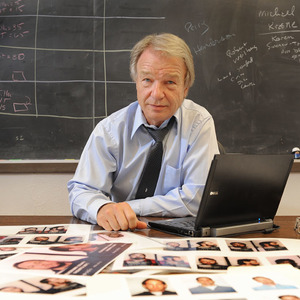
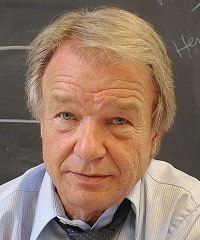
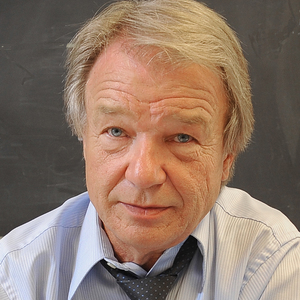
Gary L. Wells
Gary L. Wells received his Ph.D. in psychology from The Ohio State University in 1977. Currently, he is Professor of Psychology at Iowa State University, where he holds the title of Distinguished Professor and is the Wendy and Mark Stavish Chair in the Social Sciences. He is an internationally recognized scholar in scientific psychology, and his studies of eyewitness memory are widely known and cited.
Wells has authored over 300 articles and chapters and two books. Most of this work has been focused on the reliability of eyewitness identification. He has received more than $3 million in funding from the National Science Foundation for his research on eyewitness identification, and his findings have been incorporated into standard textbooks in psychology and in law. His works have appeared in some of the most prestigious journals in psychology, including Psychological Bulletin, American Psychologist, Journal of Personality and Social Psychology, Journal of Experimental Psychology: Applied, Psychological Science, Current Directions in Psychological Science, Annual Review of Psychology, and the Journal of Applied Psychology, among others.
His research-based proposals on lineup procedures, such as his idea of double-blind lineups, are being increasingly accepted in law enforcement practices across the U.S. His conclusions about eyewitness identification have received national media attention in such places as Time magazine, the Chicago Tribune, the Los Angeles Times, Wired Magazine, Discover Magazine, Atlantic, The New Yorker, and the New York Times. He has made appearances on CBS’s 48 Hours, the NBC World News Tonight, Oprah, CNN, Court TV, NBC’s Today Show, Rock Center, and 60 Minutes, among others. He was a founding member of the U.S. Department of Justice group that developed the first set of national guidelines for eyewitness evidence and co-chaired the panel that wrote the Justice Department training manual for law enforcement on eyewitness identification evidence. Wells has worked with prosecutors and police across the U.S. to reform eyewitness identification procedures.
Wells is a past President of the American Psychology-Law Society and received the Distinguished Contribution to Forensic Psychology award from the American Psychology-Law Society. In 2008 Wells was awarded an honorary doctorate from the City University of New York, John Jay College of Criminal Justice. In 2017 Wells received the Cattell Award for Lifetime Achievement in Applications of Science from the Association for Psychological Science. In 2020, Wells was given the Distinguished Contributions to Public Policy Award from the American Psychological Association.
Primary Interests:
- Applied Social Psychology
- Judgment and Decision Making
- Law and Public Policy
- Social Cognition
Research Group or Laboratory:
- Eyewitness Laboratory
Note from the Network: The holder of this profile has certified having all necessary rights, licenses, and authorization to post the files listed below. Visitors are welcome to copy or use any files for noncommercial or journalistic purposes provided they credit the profile holder and cite this page as the source.
Image Gallery
Video Gallery

Understanding and Controlling Mistaken Eyewitness Identification
Select video to watch
-
53:04 Understanding and Controlling Mistaken Eyewitness Identification
Length: 53:04
-
1:37:55 Using Science to Improve the Accuracy of Eyewitness Identification
Length: 1:37:55
-
1:00:48 Using Psychological Science to Understand and Improve Eyewitness Identification Evidence
Length: 1:00:48
Additional Videos
Journal Articles:
Courses Taught:
- Individual and Social Behavior
- Introduction to Social Psychology
- Introductory Psychology
- Judgment and Decision Making Processes
- Psychology and Law
- Research Methods in Social Psychology
- Social Cognition
- Social Psychology
Gary L. Wells
Department of Psychology
Iowa State University
476 Science
Ames, Iowa 50011
United States of America
- Phone: (515) 294-6033
- Email: glwells@iastate.edu
